Sunday

March 25, 1931 [The Public Enemy]

Four years ago, William A. Wellman took to the skies in Wings--but hauls me down to the gutter with The Public Enemy--and while the contrast is facile, it's also difficult to resist, especially with James Cagney sneering, his Tom Powers a perfect egoist, fending off the truth with wads of cash, tossed at his mother's blind devotion, his brother's shell-shocked glare--and with bullets, thrown like punches at every impediment. It's a Horatio Alger story twisted topsy-turvy but still recognizable, a secret joy that kills. And Cagney takes great pains to force our unwell admiration, his patter and step like a Tommygun's report, impossible to ignore.

True to form, though, we are punished for enjoying ourselves--by watching Tom ground like a dead cigarette beneath the plot's shoe, ruthless in its tortures. Wellman asked his pilots to be brave in Wings--but here it's the audience. We have to steel ourselves for the brutal truth, the dull sword that needs repeated strokes to finish the job.

Monday

February 27, 1931 [Die Abenteuer des Prinzen Achmed/The Adventures of Prince Achmed]

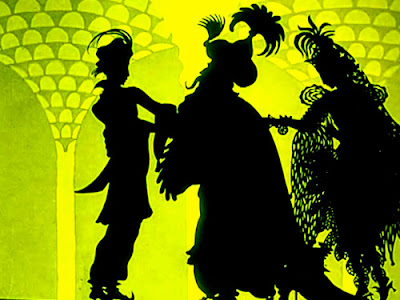
The shoulder-bobbing mice and dogs and ducks of Disney's animations fade, their melodies tinny, their purpose indistinct, in the multicolored glow of Prince Achmed and his articulated, swirling, sand-and-cutout fable-dance. Sly and elusive, foolish and free, Lotte Reiniger's "cartoon" blends many styles and techniques--their secrets kept, only their spell visible, like something out of the oldest rituals, puppets in silhouette explaining ourselves to us, as any myth should, the narrative bowing down to serve the lasting effect: the giddy joy of a mystery, slipping from my grasp, bright flashes of red and blue, green and gold, fading, returning, drawing me.

Tuesday

February 22, 1931 [Dracula]

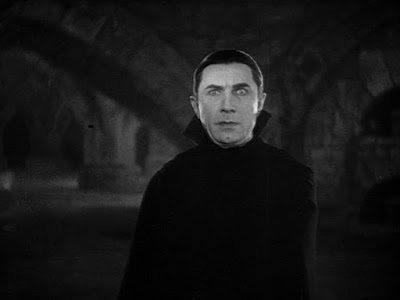
First Murnau, now Tod Browning: The old Thing is most certainly undead, slipping away from his little box once more. Browning has lost Chaney--and what a Dracula he would have been, muscular and rising like a bloodthirsty pugilist as the bell tolls. But he gains Bela Lugosi--already stalking the vampire on the stage, now cornering him in Hollywood. And despite Browning’s best efforts--especially the sets, their dusty light resting on the pulsing necks of everything full-blooded, webs clinging like desire--and the pacing of certain scenes, as when the Brides advance on Harker, noiseless, inexorable--such moments are almost solemn, hushed in the presence of some dire royalty--it’s Lugosi who commands the frame, stiff with post-mortem rigor, proud as Satan of his looks, enjoying the level note of false sympathy in his curling voice. Lugosi has Dracula’s egoism, eager to be at the center of every dark room, his Theda Bara eyes narrowing just enough to catch you as you try to escape. He is having a wonderful time, amused by your growing certainty of just how bad things will get.

I am hard-pressed to think of another American movie so dedicated to the Gothic threat: The past disappears, and with it our possibilities, leaving only the Secret Unfolded, spreading like a poisonous bloom. And has any other actor been so pleased as Lugosi with making good on this threat?

November 17, 1930 [Hell's Angels]

The waiting crowds break like pilots veering toward their targets: Howard Hughes has drawn us in, and we eagerly dog-fight all the way to our seats. The picture itself reminds me of certain films made during the War, like J'Accuse!--boundless heroism slapped around by bitterness. Remarque in All Quiet on the Western Front may have earned the right to scorn pointless sacrifices, but Hughes had the money to buy in--not that he didn't bowl us over: The aerial sequences scoop us up like feathers and blow us all to Hell, dizzy as Coney Island daredevils in our anchored seats.

But watching the three chums die just to prove they're better than the War takes the fun out of it--despite Jean Harlow's round-faced, curving invitation. Hughes is brutally frank with us: death is an agony--the pilot crying out, gnashing his teeth, vainly wrestling the bullets inside him--or a simple drop into the darkness--dismal to consider while trying to enjoy the thrill of flight. In the end, Hughes does allow us to soar--but not without making us squirm, the loop-the-loops and vertical drops not the only falls turning my stomach.